

Tank and Hatch Cleaning
Tank and hatch cleaning are essential maintenance procedures performed on ships to ensure cargo integrity, prevent contamination, and comply with international maritime regulations.
Tank cleaning is the process of removing residual cargo, sludge, and contaminants from a ship’s storage tanks, commonly found on oil tankers, chemical tankers, and bulk carriers.
Tank Cleaning (For Oil, Chemical & Fuel Tanks)
Tank cleaning is performed on ships carrying oil, chemicals, fuel, or food-grade liquids. Proper cleaning ensures that cross-contamination, corrosion, and safety hazards are minimized.
Types of Tanks Requiring Cleaning:
- Fuel Tanks – Used for storing marine fuel (HFO, MGO, LNG).
- Cargo Tanks – Holds chemicals, edible oils, petroleum, and hazardous liquids.
- Ballast Tanks – Filled with seawater to maintain ship stability.
- Slop & Bilge Tanks – Contain waste oil, sludge, and water residues.
- Freshwater & Drinking Water Tanks – Require sterilization to prevent bacterial growth.
Tank Cleaning Process
- Gas-Freeing & Ventilation – Tanks are ventilated to remove toxic gases before entry.
- Residue Removal – Sludge, sediment, and leftover cargo are extracted.
- Chemical & High-Pressure Cleaning – Specialized chemicals and hot water jets are used to break down stubborn residues.
- Final Rinsing & Drying – Tanks are rinsed with fresh water and dried to remove moisture.
- Inspection & Certification – Tanks are checked for cleanliness and certified for the next cargo.
Why Is Tank Cleaning Important?
- Prevents Cross-Contamination – Ensures the purity of new cargo.
- Maintains Cargo Quality – Especially crucial for food-grade and pharmaceutical shipments.
- Reduces Corrosion & Bacterial Growth – Prevents structural damage.
- Ensures Regulatory Compliance – Meets IMO, MARPOL, and SOLAS regulations.
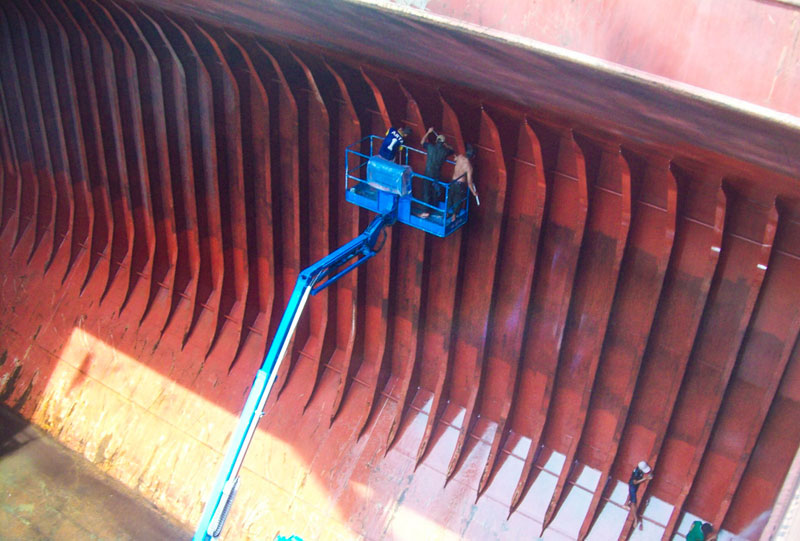
Hatch Cleaning (For Dry Cargo Ships & Bulk Carriers)
Hatch cleaning is vital for bulk carriers and dry cargo ships to prevent cargo contamination, improve operational efficiency, and meet regulatory standards.
Types of Hatches That Need Cleaning:
- Grain & Food Cargo Holds – Must be free of pests, residues, and moisture.
- Coal & Mineral Cargo Holds – Residues can react with new cargo or cause blockages.
- Steel & Metal Cargo Holds – Require a dry, rust-free environment.
- Fertilizer & Chemical Cargo Holds – Prevents chemical reactions and contamination.
Hatch Cleaning Process
- Cargo Residue Removal – Sweeping, scraping, and vacuuming to remove leftover cargo.
- High-Pressure Water Cleaning – Washing with fresh water to remove dust, dirt, and chemical residues.
- Chemical Cleaning (If Needed) – Used for stubborn stains or hazardous material residues.
- Drying & Ventilation – Ensures no moisture remains before the next cargo load.
- Inspection & Certification – Verified by port authorities and surveyors.
Why Is Hatch Cleaning Important?
- Prevents Cargo Contamination – Essential for food, grains, and sensitive materials.
- Reduces Risk of Cargo Damage – Moisture, dust, and residues can ruin shipments.
- Ensures Smooth Operations – Clean holds prevent loading delays.
- Compliance with International Standards – Meets SOLAS, IMO, and port regulations.
Why Choose Professional Tank & Hatch Cleaning Services?
- Expert Handling – Trained professionals use specialized equipment and chemicals.
- Safety First – Adherence to strict safety procedures to protect crew and the environment.
- Time & Cost Efficiency – Fast, effective cleaning to reduce downtime.
- Eco-Friendly Practices – Proper waste disposal ensures minimal environmental impact.
Regular tank and hatch cleaning is essential to keep ships in top operational condition, maintain cargo integrity, and comply with international maritime laws.
