


Fresh & Chilled
“Fresh & Chilled” refers to high-quality perishable food items that are stored and transported under controlled temperatures to maintain freshness, texture, and nutritional value while extending shelf life. These items are typically stored at 0°C to 5°C (32°F to 41°F) to prevent spoilage while keeping them ready for consumption.
Seasonal Fruits & Vegetables
- Fresh Produce: Hand-picked and delivered at peak ripeness.
- Chilled Storage: Maintains moisture, color, and taste while slowing spoilage.
- Examples: Berries, citrus fruits, leafy greens, root vegetables, etc.
Fresh Local Meat, Poultry, Seafood & Fishes
- Fresh Meat & Poultry: Directly sourced from farms and stored at chilled temperatures to prevent bacterial growth.
- Seafood & Fish: Often stored on ice or under refrigeration to maintain texture and prevent spoilage.
- Storage: 0°C to 4°C for meat and poultry; 0°C to 2°C for seafood.
Dairy Products, Cheese & Eggs
- Dairy: Includes milk, butter, and yogurt that require refrigeration to retain texture and flavor.
- Cheese: Stored at specific temperatures to prevent drying or over-ripening.
- Eggs: Kept in cool storage to maintain quality and prevent contamination.
- Storage: Typically at 2°C to 5°C
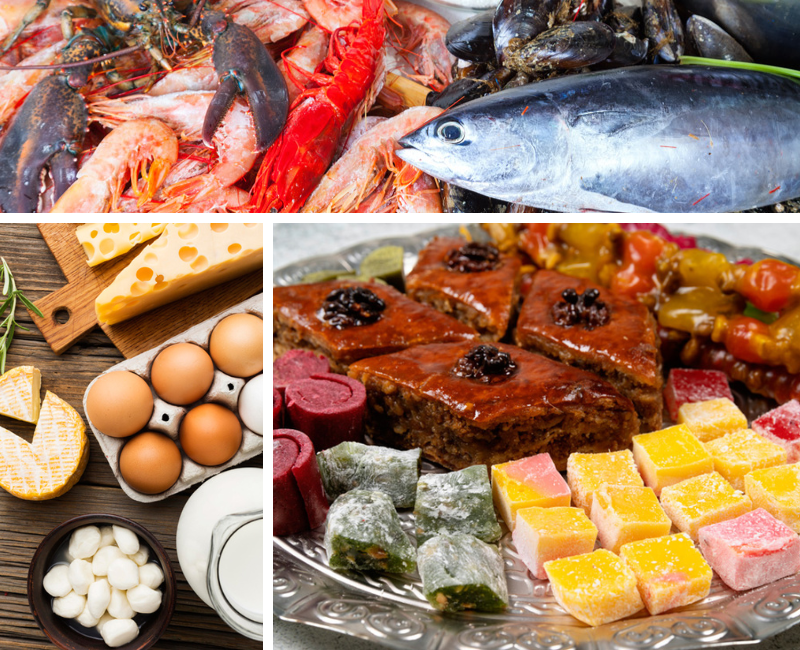
Pastries, Sweets & Desserts
- Fresh Baked Goods: Some require refrigeration (e.g., cream-based pastries), while others stay at room temperature.
- Desserts: Custards, mousse, cheesecakes, and chocolates are kept chilled to maintain consistency.
- Storage: 3°C to 7°C for dairy-based desserts, ambient temperature for dry pastries.
Why is “Fresh & Chilled” Important?
- Maintains Freshness & Flavor – Preserves the natural taste and texture.
- Extends Shelf Life – Prevents premature spoilage.
- Ensures Food Safety – Slows bacterial growth and keeps food hygienic.
- Preserves Nutrients – Retains vitamins and minerals in fresh food.
