

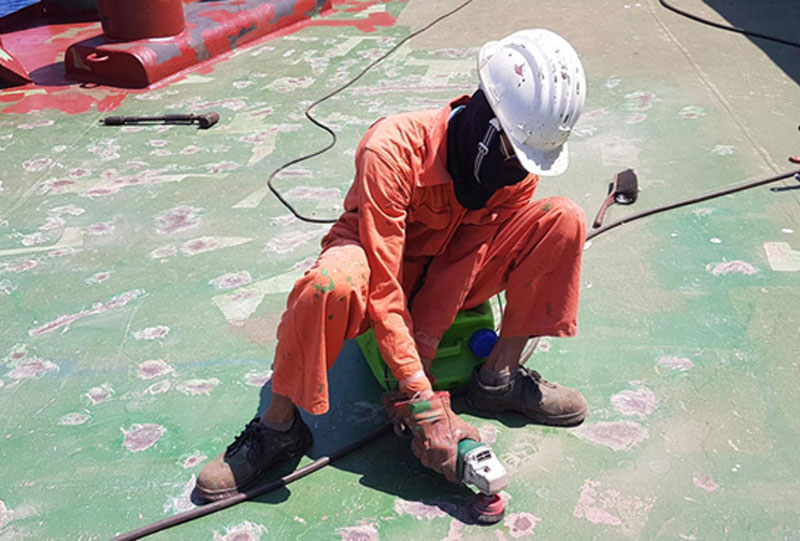
Chipping
Chipping is a common ship maintenance process that involves removing rust, old paint, and corrosion from a ship’s metal surfaces, particularly the deck, hull, and superstructure. This is a crucial part of ship upkeep to prevent structural damage, ensure safety, and maintain the vessel’s appearance.
What Is Chipping in Ship Maintenance?
Chipping is the manual or mechanical removal of rust, paint, and marine growth from ship surfaces, including the deck, hull, superstructure, cargo holds, and engine room. This process is a vital part of a ship’s routine maintenance and dry-docking procedures.
Marine corrosion occurs due to continuous exposure to saltwater, humidity, and harsh weather conditions, making regular chipping essential for preserving the ship’s integrity.
Chipping Process & Techniques
Manual Chipping.
- Chipping Hammers – Used to knock off rust and paint from metal surfaces.
- Scrapers & Wire Brushes – Helps remove residual rust and paint.
- Needle Guns – Pneumatic tools that use multiple small chisels to break down corrosion.
Mechanical Chipping.
- Pneumatic Needle Scalers – Efficient in removing rust and old coatings.
- Rotary Wire Brushes – Used with drills or grinders for faster paint and rust removal.
- Sandblasting (Grit Blasting) – High-pressure air mixed with sand or steel grit to clean large surfaces.
- Hydro-Blasting (Water Jetting) – Uses high-pressure water jets to strip away rust and marine growth.
Why Is Chipping Important for Ships?
- Prevents Corrosion & Structural Weakening – Protects the ship’s metal surfaces from rust-related damage.
- Prepares the Surface for Painting – Ensures a smooth and clean base for primer and paint application.
- Increases Longevity of the Vessel – Reduces long-term maintenance costs and extends ship life.
- Enhances Safety – Maintains the ship’s strength and prevents potential failures.
- Regulatory Compliance – Meets IMO and classification society standards for ship maintenance.
Where Is Chipping Needed on a Ship?
- Ship’s Deck & Superstructure – Constant exposure to sea spray and weather makes them prone to corrosion.
- Cargo Holds & Tanks – Regular cleaning and repainting prevent contamination.
- Engine Room & Machinery Spaces – Maintains efficiency and safety of onboard equipment.
- Ballast Tanks – Helps prevent corrosion from seawater exposure.
- Hull & Underwater Sections – Essential during dry-docking for antifouling maintenance.
Post-Chipping Process: Surface Treatment & Coating
Once chipping is complete, surface preparation and coating are required to protect the metal from future corrosion:
- Surface Cleaning – Removing dust and debris from chipped areas.
- Primer Application – Protective base coat to prevent immediate rusting.
- Painting & Coating – Applying high-quality marine paint and antifouling coatings.
Why Choose Professional Chipping Services?
- Experienced Technicians – Trained teams ensure proper rust removal.
- Advanced Equipment – Use of modern tools for faster and more efficient chipping.
- Compliance with Marine Regulations – Ensures adherence to safety and environmental standards.
- Long-Term Protection – Helps maintain vessel efficiency and reduces future repair costs.
